

Estimated reading time: 9 minutes
Key Takeaways
- Most donors, volunteers, and prospective members start with a Google search, so organic visibility is not optional for non-profits or associations.
- Mission-driven keywords and community trust signals matter more here than they do in commercial SEO.
- Google Ad Grants gives eligible non-profits $10,000 a month in free search ads, and it works best alongside organic SEO, not instead of it.
- Accessible pages tend to rank better because the same fixes that help screen readers also help Google understand your content.
- You can start improving your search visibility today with free tools: Google Search Console, Google Analytics, and Google Business Profile.
Table of Contents
- Why Search Visibility Matters for Non-Profits and Associations
- How Non-Profit and Association SEO Differs From Commercial SEO
- Where to Start With Keyword Research
- On-Page SEO Best Practices for Mission-Driven Websites
- Reaching Your Community With Local SEO
- Technical SEO Essentials You Cannot Skip
- Building a Content Strategy That Keeps Working
- Measuring What Matters
- Why Wow Digital
- Frequently Asked Questions
Why Search Visibility Matters for Non-Profits and Associations
A donor searches “animal shelters near me” before they open their wallet. A prospective member searches “professional association for [industry]” before they submit an application. Neither one waits for a newsletter. The first decision happens on a search results page, and if your organization does not show up there, it never gets the chance to make its case.
Search visibility affects donation rates, volunteer sign-ups, and membership renewals at the same time. Someone finds your page through a search, reads two paragraphs, and decides whether your cause or your association is worth ten more minutes of their attention. That decision happens before they ever see your mission statement in full or hear your executive director speak.
Every non-profit and association we work with already has a mission worth funding. The ones that grow are the ones people can find.
How Non-Profit and Association SEO Differs From Commercial SEO
A commercial SEO strategy chases transactions. A non-profit or association strategy chases trust first, then action. The keywords change, the content changes, and the signals Google and your audience both look for change with them.
Donors search for causes, not products: “help feed families in Toronto” instead of “buy groceries online.” Members search by role and outcome: “continuing education credits for accountants” instead of a brand name. Community trust markers, board credentials, charity registration numbers, member testimonials, and press coverage carry more weight for your audience than a five-star review carries for a retailer.
The Role of Google Ad Grants in Non-Profit SEO
Eligible non-profits can claim $10,000 a month in free Google search advertising through the Google Ad Grants program. It puts your organization at the top of relevant searches while your organic rankings build in the background.
Ad Grants brings traffic today. SEO keeps that traffic coming after the ads stop running.
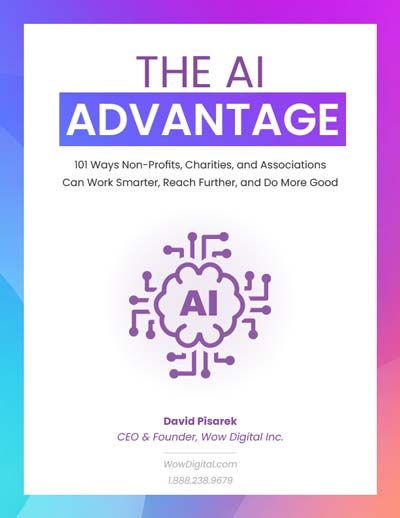 New Book from David PisarekSteal 101 Proven AI Prompts for Non-Profits and AssociationsGrant proposals taking three days? Member renewals slipping through the cracks? The AI Advantage gives you a copy-paste prompt for every one of its 101 strategies. Works with any AI tool you already use.Get Instant Access for $37
 Associations are not eligible for the grant itself, but the same principle applies: paid visibility buys you time while organic content earns a permanent spot.
Where to Start With Keyword Research
Good keyword research starts with the words your donors, volunteers, and members already use, not the words your board uses in a strategic plan.
Finding Keywords That Attract Donors, Volunteers, and Members
Pull data from two free sources. Google Search Console shows you which searches already bring people to your site, including ones you rank for on page two or three, and Trends shows you whether interest in a cause or an industry topic is climbing or fading. Compare the two, and you will find gaps between what people search for and what your site currently answers.
Long-Tail Keywords and Why They Work for You
“Volunteer opportunities for teens in Ottawa” will never get the search volume of “volunteer.” It will also convert at a much higher rate because the person typing it has already decided what they want and is looking for someone who can give it to them. Associations see the same pattern: “CPD hours for social workers in BC” beats “professional development” every time it matters, which is at the moment someone clicks through.
On-Page SEO Best Practices for Mission-Driven Websites
Title tags, meta descriptions, heading structure, and internal links are the mechanics search engines use to understand what a page is about. Get them right, and your content has a chance. Skip them and even great writing stays buried.
How to Write Content That Reflects Your Mission and Still Ranks
Storytelling and search optimization pull in the same direction here, not opposite ones. A page about your literacy program can open with a real story about one learner and still target “adult literacy programs in Alberta” in the title, the first paragraph, and one heading. Readers get the story, and search engines get the signal they need. Neither one has to lose for the other to win.
The Importance of Accessible Web Pages for SEO
Alt text on images, a heading hierarchy that nests in the right order, and body text set large enough to read without zooming all help a screen reader user find your content. They also help Google’s crawler read it.
Accessibility work and SEO work overlap on a page-by-page basis, so fixing one often moves the other.
Reaching Your Community With Local SEO
Most non-profits and many associations serve a specific city, province, or region, which makes local search one of the highest-return channels available. A Canadian food bank and a US regional trade association both compete for the same phrase: “near me.”
Setting Up and Optimizing Your Google Business Profile
Claim your listing, fill in your hours, address, and category correctly, and add real photos of your space, staff, or events. Maps results appear above standard organic results for local searches, and an unclaimed or half-finished profile hands that spot to someone else.
Building Local Citations and Community Backlinks
A link from your city’s non-profit directory, a local government resource page, or a partner association’s member list tells Google your organization is a real, recognized part of that community. These links carry more weight than a generic business directory listing, and you can earn them for free. Ask.
Technical SEO Essentials You Cannot Skip
Site speed, mobile responsiveness, HTTPS, and clean crawlability sit underneath everything else on this list. Get the content right on a slow, broken site, and none of it matters, because visitors leave before they read a word.
Why Site Speed and Mobile Performance Matter for You
A donation form that takes six seconds to load loses donors before they type a card number. A membership application on a page that will not render properly on a phone loses applicants who gave up and closed the tab. Search engines measure both and factor them directly into ranking.
Building a Content Strategy That Keeps Working
One blog post rarely moves the needle. A steady calendar of cause-related articles, community stories, and practical resources compounds over months, and each new piece makes the ones before it easier to find.
What Types of Content Drive the Most Traffic
How-to guides answer a specific question your audience already has. Impact reports give donors proof their money worked. Volunteer or member spotlights bring in search traffic from people typing a name into Google after meeting someone at an event. FAQ pages catch the exact questions people ask before they commit to anything.
Measuring What Matters
Track organic traffic, keyword rankings, donation form completions, and membership sign-ups together. Traffic without conversions tells you people find you and leave unconvinced. Conversions without traffic growth tells you the site works, but not enough people ever see it.
Free SEO Tools You Can Use Right Now
Search Console shows rankings and click-through data straight from Google. Analytics shows what happens after someone lands on your site. Ubersuggest fills in keyword volume and competition data neither of the first two tools provides. None of it costs a dollar, and all three together give you a full picture of what is working.
Why Wow Digital
We have built and optimized more than 320 websites for non-profits and associations across Canada and the United States, and SEO shows up in every one of them, not as an add-on at the end. If your organic traffic has stalled or you are not sure where to start,
- Book a 20-min strategy call, and we will walk through what’s holding your site back.
Frequently Asked Questions
What is SEO and why does it matter for non-profits and associations?
SEO is the practice of improving your website so it ranks higher in search results for the terms your donors, volunteers, and members already search. For mission-driven organizations, it matters because most people begin their support or membership journey with a search, not a direct visit to your site.
How long does it take for a non-profit or association website to rank on Google?
Most organizations see meaningful movement in three to six months, with stronger results building over a year of consistent work. Local searches and long-tail keywords tend to move faster than broad, competitive terms.
Can a non-profit or association do SEO without a big budget?
Yes. Google Search Console, Google Analytics, and Google Business Profile are free, and technical fixes like heading structure and alt text cost time, not money. A paid strategy speeds up results, but it is not a requirement to start.
What is Google Ad Grants and how does it help SEO?
Google Ad Grants gives eligible non-profits $10,000 a month in free search advertising. It does not directly boost organic rankings, but it fills the traffic gap while your SEO work builds momentum in the background.
How do you choose the right keywords for a non-profit or association?
Start with the language your own audience uses in Google Search Console queries and in emails they send you, then check search volume in a free tool like Google Trends or Ubersuggest. Cause-related and role-specific long-tail phrases convert better than broad, generic terms.
Does website accessibility affect SEO?
Yes. Alt text, proper heading hierarchy, and readable font sizes help both screen reader users and Google’s crawler understand your content, so most accessibility fixes improve search performance as a side effect.
What is local SEO and how can non-profits and associations use it to reach more people?
Local SEO optimizes your visibility for searches tied to a specific city or region, most often through your Google Business Profile and local backlinks. It is one of the highest-return channels for organizations serving a defined community instead of a national one.







0 Comments