

Video recording
Audio recording
Welcome to this eye-opening episode of the Non-Profit Digital Success Podcast! 🚀
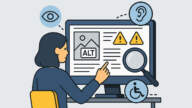
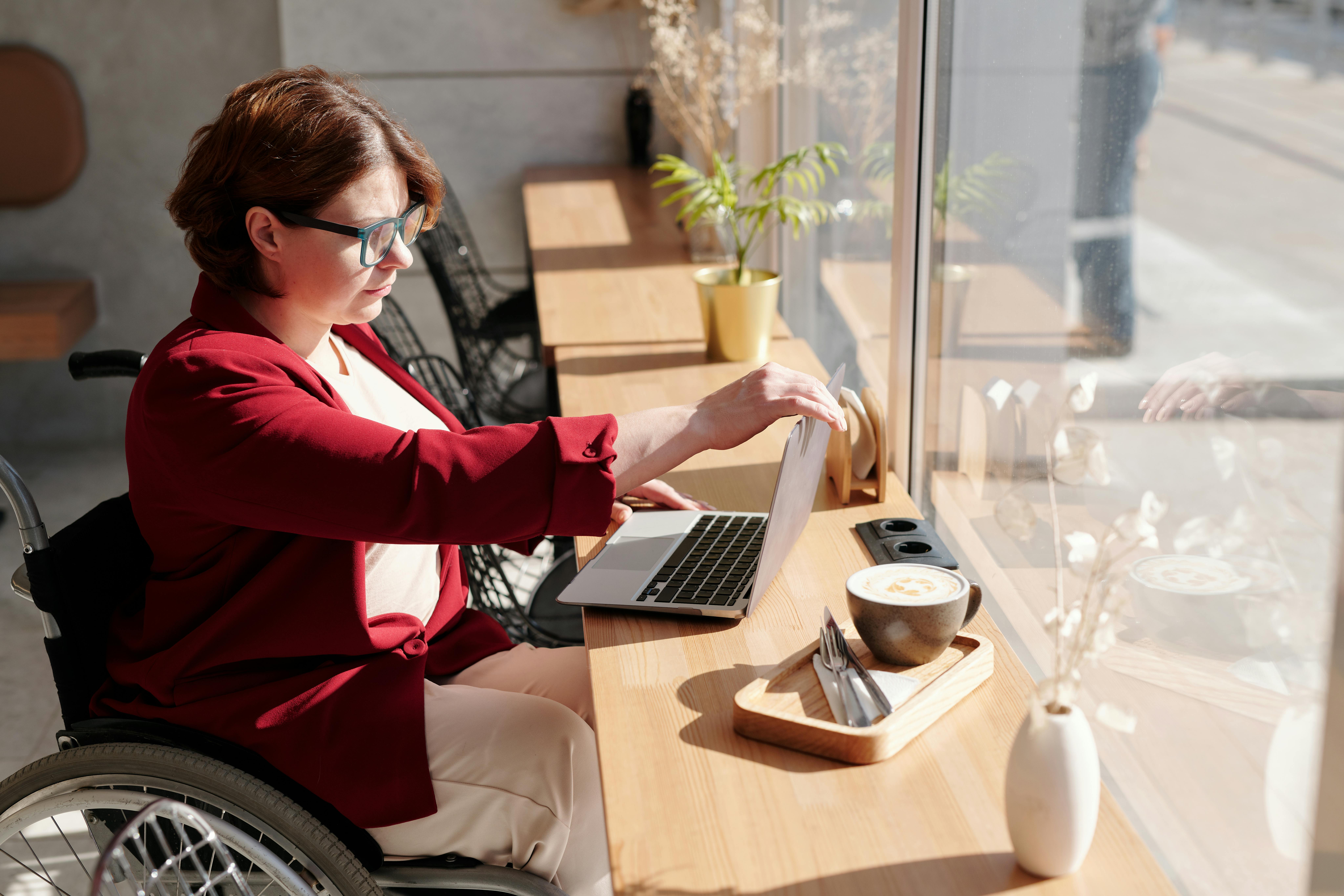
In this conversation, David Pisarek sits down with Amber Hinds, CEO of Equalize Digital, to unpack why web accessibility matters so much for non-profits, not only for compliance, but also for inclusion, usability, donor experience, and long-term impact.
Discover how accessibility improvements can help your non-profit better serve your community, reduce friction on your website, and create a more inclusive digital experience for everyone.
From keyboard navigation and screen readers to donation form accessibility, overlays, and practical first steps, this episode is packed with actionable insights to help your organization build a stronger and more accessible online presence. Tune in and learn how small digital changes can make a big difference. 💡
Mentioned Resources
- Visit Equalize Digital
- Overlay Fact Sheet, a resource on accessibility overlays and their limitations
- WAVE browser extension, a free tool for checking accessibility issues on websites
- International Association of Accessibility Professionals (IAAP), for finding certified accessibility professionals
- NVDA screen reader, a free open source screen reader for Windows
- VoiceOver, the built-in screen reader available on Mac devices
- Equalize Digital Accessibility Checker, a WordPress plugin for automated accessibility testing and fixes
- ArchiveWP, a tool for archiving older website content for accessibility and compliance purposes





Episode Transcription
David Pisarek: Welcome to the Non-profit Digital Success Podcast, brought to you by wowdigital.com, your best place for non-profit websites and design. Now including fractional CMO support. Is your website unintentionally turning people away? Well, Amber Hinds, CEO of Equalize Digital, breaks down how accessibility improvements can boost engagement, credibility and impact for non-profits. So stay tuned and let’s unlock a more inclusive date digital strategy. Welcome to the Non-profit Digital Success Podcast. Hi, I’m David. I’m the host of the show. And in this episode we’re going to be talking about web accessibility, inclusive digital marketing, and I’ve got Amber Hinds here with me. But before I continue, I just wanted to mention that our podcast does need your help. So if you find this episode or any of our others insightful, if you interesting or helpful, please like subscribe, share and comment. It will help our podcast immensely. Amber is the CEO of Equalize Digital, which is an accessibility consulting firm, and the creator of the WordPress Accessibility Checker, which is helping organizations build more inclusive and compliant websites. So, Amber, I know you’re busy. Thank you so much for joining on the show today.
Amber Hinds: Thank you for having me. I’m glad to be here.
David Pisarek: Yeah. So let’s just jump right in. For non-profit leaders who are new to the topic, the idea of accessibility, maybe they’ve heard a few things they’re probably thinking about, like getting into the building or using washrooms and making sure, you know, wheelchairs can get through. A lot of organizations, I don’t think think about digital accessibility. So I guess maybe in some layman’s terms, plain language, why does it matter and what is it?
Amber Hinds: So when you think about your non-profit’s reach, your website is one of the top ways that you are going to be able to connect with both the population and the community you serve, and also the people who will help to fund all of your great initiatives out there as a non-profit and, you know, support them and donations and all of these sorts of things happen on your website. So website accessibility is really about ensuring that all people can access websites regardless of how they use the computer. So a lot of us use a typical keyboard. We have a mouse that we use and we can see and we can hear. So captions are maybe just a bonus. But there are a lot of folks out there. The stat is 1 in 5, according to the World Health Organization, have some form of disability. And this could be mean that they have to interact with computers and websites in a different way from the way we might as a typical user. And website accessibility is really about ensuring that we can reach all people, which is that 1 in 5 number, which is a very, very large number.
And these are people who might benefit from a non-profit or potentially support and donate to a non-profit.
David Pisarek: I love that. So one in five, that’s 20%, probably, at minimum. I think there’s. The number’s probably closer to 30. I think there’s a lot of people that either don’t identify or are not part of the group. I personally think the number is probably a little bit higher than that. But yeah, like 20% of your audience is potentially being left out and excluded, hopefully, likely, unintentionally.
Amber Hinds: And there are a lot of things that we think of as accessibility features that actually benefit everyone. So like you mentioned, there are a lot of people who might not think of themselves as disabled. Captions for videos and transcripts for audio files are a really great example of that. Many people who are not deaf or might not even consider themselves hard of hearing, even if they have a little bit of hearing loss, will use those, including typically abled people. One of my daughters always watches TV with the captions on because she said it helps her pay attention. I don’t know, because she’s like fighting with her phone and it makes her ignore her phone more. I don’t know. She likes to read what people are saying. And there’s a lot of stuff on websites that is good for accessibility, but it’s just good for overall usability, helping people find the information and understand the structure. A lot of it is good design, best practices. So it really does benefit everyone.
David Pisarek: One of the other points, just to kind of take the conversation, hopefully not down a rabbit hole, is there’s a lot of benefits to making your site more accessible. So having closed captions, making sure that text to speech software can read it, and SEO benefits are huge on that. So you will be found more by search and by AI platforms. You’re going to show up more where people are looking for, whatever it is, your topic, your expertise, your organization is dealing with. So a little bit of a side note there. It’s better for search and being found as well.
Amber Hinds: You know, the other benefit that sometimes maybe organizations don’t think about that really does help them though, especially if you’re a small organization, is that when your website is more usable for people, then they are less likely to reach out to you for personalized help. So let’s say you run an animal shelter and you have adoptable dogs and you want people to be able to get information about the adoptable dogs. Well, if they are able to find them, get information or descriptions of the pictures of the animals off the website, then they don’t have to come in and, and talk to a staff in person or they don’t have to call on the phone and get that information. So you can actually reduce your operating costs because people can self-serve instead of you having to pay staff to actually support more people because they can’t get the information off the Internet. There’s like so many benefits to this, to the organization. Like you mentioned SEO, but also reduced operating costs as well.
David Pisarek: It also helps to reduce risk. So I worked at a hospital for, just under about five years, and myself, and somebody from the legal team, we were the SME as the subject matter experts for accessibility and compliance around that. Specifically I was involved in the digital side of it and we ran every year compliance training with everybody that works on the website so that they could be refreshed and updated on the latest things like making sure your images have alt tags on them and long descriptions and like all that kind of stuff. That’s really, really important. And I think a lot of organizations think of accessibility as legal and compliance issues. And yes, there have been a plethora of frivolous lawsuits, definitely. I remember hearing some stories right around the start of COVID, I believe in Northern California there were some lawyers that got people from the community that had disabilities to file lawsuits against restaurants because their websites, they couldn’t order from the website because it wasn’t accessible. So yes, there are potential legal risks and there’s money involved in those potential things as well. But when we think about building accessible websites, so how can that help kind of, I guess mitigate some of those issues but at the same time also like improve trust and reach and engagement?
Amber Hinds: So when you’re talking about legal risk, it is important to know. Of course, I think neither of us here are attorneys. There are laws all around the world that do require this. And sometimes yes, there are attorneys that are going out in the United States and asking, you know, trying to find plaintiffs and doing that. A pattern I guess. But there are also real lawsuits because of people who are left out and they don’t have access to the information that they should have. Outside of the United States it’s less of a lawsuit situation than a fine situation. So in Canada, the Accessibility for Ontarians with Disabilities act or Manitoba has the Accessible Manitoba act. And that also impacts non-profit organizations and for-profits. Manitoba’s actually says if you have one employee, it applies you. So it doesn’t matter how small your revenue is, if you’ve got one employee, it applies. And then in Europe, there’s the European Accessibility Act. So really what making your website accessible does on that front is trying to make that access easier for folks so then they don’t have to complain or they don’t have to go this, you know, difficult route of trying to get you to fix things, enforce it or report it to the government.
And the thing though, I think that non-profits should understand is, if you’re starting from, I’ve never thought about accessibility before and maybe I’ve hired a web developer who wasn’t good at this, to becoming accessible is that this is a journey and it’s a process. It’s not something that happens overnight. So the thing that I would always advise an organization to do, and if you’re in Europe, you’re actually legally required to do this, is to add an accessibility statement to the website in the footer that just says, ‘Here is our approach to accessibility, here is what we are doing, and here is how you can get help.’ And this is really important because, if you are worried about risk, the easiest way to mitigate risk is to give people a pathway to complain to you and not to someone else. If they can’t figure out how to contact you, they can’t figure out how to get help. And then if you don’t have an internal process, when someone does report a problem to address that and to get them what they need, that’s when you’re more likely to run into these scenarios where there is a legal complaint.
But if an organization is worried about risk, then I would say make sure you make it really clear how someone can get accessibility help and then train your volunteers or your staff or whoever it is that connects with the public and responds to those requests on what to do. If someone asks accessibility help, of course, the first thing is, they need to get the person the information they need. But then number two is they need to report that back to their web development team, whoever that might be, so that problem can be fixed so it’s doesn’t happen for more users in the future.
David Pisarek: Yeah, right. And so how can we like over time make it better and better and better? Right? The thing that I always say is, if as a non-profit or charity or community-based organization, if your digital footprint is not accessible, then you’re not actually properly serving your constituents, your region, the folks that need your help and support. So I think it’s really important that everybody actually does the best that they can. I know some organizations, they’ve got beautifully designed annual reports, but they’re output in the PDF as like big images, right? So the text isn’t selectable. You need to go back to your designer and say, ‘Hey, I need a version where the text is actually like live text in the PDF at the same time.’
Amber Hinds: Or maybe even not a PDF version for your annual report. Like maybe you have the, the fancy PDF and then you have a web version that can just be viewed in a normal browser and doesn’t require downloading a giant document to a phone. Because PDFs like, that’s the thing that I always think is funny. And non-profits love their PDFs. But PDFs are not just difficult sometimes for assistive technology users, like screen reader users. They can also be kind of annoying to someone on a mobile phone. Like, if I want to know how many volunteer hours that some organization, wouldn’t it be great if I could just get that off a webpage instead of having to download a 25 page document and try to search through it on my phone?
David Pisarek: I’d love to get your take on this, Amber. There are platforms out there. I’m going to name two of them. There’s AccessiBe and Userway. Quick little JavaScript code that you can throw into the website. And they claim like they fix everything, right? I’ve got my opinion, but I’d love to hear yours.
And we’re partners, so I’d love to hear what you have to say.
Amber Hinds: So I start with, if it sounds too good to be true, then it probably is. And usually a promise of we will fix all of your accessibility issues in after you install this code, which takes you five minutes. Sounds too good to be true. The reality of overlays is they are not typically recommended by people with disabilities. There’s a really great website that I always recommend people go and look at called the Overlay Fact Sheet. This website has a lot of information and quotes from actual people with disabilities about their opinions on these overlays and whether they have caused issues for them when they engage on websites. In the United States, in about a year ago now, so January 2025, the Federal Trade Commission fined AccessiBe a million dollars for lying about their ability to fix accessibility. So the Federal Trade Commission said, you cannot make websites accessible and all of your marketing promises that you can and you are misleading your customers who are business owners. And I know AccessiBe has also been facing or is on dealing with right now a couple of class action lawsuits from businesses that use their plugin and then were sued anyway.
So my general take is that the quick fix band aid solution doesn’t actually do anything. It might fix small areas, but sometimes it also adds problems too. And it is much better to approach accessibility where the problems are created. Also, those tools are not cheap, especially on large websites to get lots of page views because they charge people like they have view counts and then you have to go up in pricing tiers as and it’s almost like the more, the better your website does, the more it’s going to cost you, even if it’s still only five pages. And if you’re thinking a non-profit and you want to make the most of your investment in your website, signing up for a SaaS subscription that’s going to only fix some portion and has been shown to not decrease legal liability in the U.S. I think there’s a stat from Usablenet who does a report on lawsuits annually. In their last report last year they said that 25% of the lawsuits were against entities that already had an accessibility overlay on their website. So it’s not really going to increase your risk. You’re adding this huge cost, then the second you cancel it, anything that it actually was fixing is just going away.
It’s much more cost effective to invest in hiring a developer who understands accessibility and have them fix the issues one time and pay for that one time instead of every month.
David Pisarek: I love that and I think it’s really spot on. Our approach with it has been it’s an add on, right? It’s a thing that will add some additional features to the website, but you need to go back to your point and actually fix the problem where it’s created. So it’s probably in the templates of your WordPress site. It could be in the content because somebody in the team wasn’t trained on this or that in the site. Especially with all these page builders that are out there. You’ve got Divi, Elementor, WP Bakery, WordPress, Gutenberg, there’s a whole bunch. And it allows people to make the layouts really beautiful easily, but it also allows them to make white text on a yellow background, which we all know isn’t, you know, meeting accessibility standards. Just for everybody listening, AA compliance, WCAG. What is it, 2.2 now? I think AA or 2.3, something like that. AA compliance 2.2. It’s four and a half to one color contrast ratio. If you don’t know what that means, just go to Google search for contrast ratio checker and you can put in the values and it’ll tell you whether it’s accessible or not, whether the font size is bold enough or big enough or whatever.
So leverage tools like that. They’re free and they’re awesome and it will help you make a better experience. Pause for a quick moment if you’re listening to this and thinking we know our non-profit could be doing more online. We’re just not sure where to start. That’s exactly what we help with. At Wow Digital, we work with non-profits to improve their website’s digital strategy and donor experience so they can raise more and create more impact. And the first step is to book your free strategy call with us. Just visit wowdigital.com/consult to get started. You’re going to walk away with clarity, practical next steps, and real ideas that you can use right away. Okay, back to the episode. So I’m curious, Amber, from your experience working with non-profits and for-profits like the businesses and those that you work with, what are some of the most common accessibility mistakes that you often see on websites or digital campaigns?
Amber Hinds: I would say, increasingly, we have a lot of people come to us who have already tried to do some accessibility. So we don’t frequently see as much of the easily detected automated issues. Like there’s a report called the Web a million where they go out and they survey the 1 million top websites by traffic. So really large websites, and this comes out of a university in Utah, and they scan their homepage and they say ‘What are the most common problems?’ And like, color contrast is one that is like almost every website, right? 96% of websites have color contrast failures, which can be really difficult for someone with low vision or maybe someone who’s on their phone outside on a sunny day. You need higher contrast to be able to see that on the phone screen. We do see some of that, but increasingly not as much. I would say, like, what we see a lot as far as common problems are things also that automated tools can’t always find. And so it’s really important to use automated tools, but it’s also important to do some testing on your own. So an example of this is, can you use your navigation menu on your website without a mouse?
And people listening to this podcast might be like, well, wait a minute, how do you use a website without a mouse? So here’s how: you would load the front of your website and you would hit the tab key. And the tab key should be able to go to anything that is an interactive element. So that would be a link or a button. It wouldn’t go to just a random heading or paragraph. Goes to interactive things. So you would hit your tab key and can you get all the way across your top menu items? Can you get to every item in a dropdown? And that, not having functional navigation is actually incredibly common. We fix navigation menus on almost every website we remediate. And that is one of the most important things for people to be able to use your website, is being able to use the navigation menu. You know, I would say unlabeled form fields. And I do see this. I, non-profits especially, there’s a lot of tools like Donorbox and different sort of fundraising tools that non-profits like to embed in their website. And they give them this whole like donor management platform and all that stuff.
But you really have to be careful because a lot of these are not accessible out of the box. And so they have form fields on the donation forms that have no labels. They look like they have a label, but they’re not associated for a screen reader user. And if you’re thinking about what do I most want people to do on my website? Get information about whatever my core service is. Give me money. If you’re making it so that 20 to 30% of people cannot give you money. But I mean, is your website working for you? Probably not. So I would say like that, those are probably some top things that I’d recommend looking at. And then obviously any sort of automated tool, if you have a WordPress website, our free accessibility checker plugin can really alert you to tons of things like empty buttons where you have an icon and there’s no text. Links that aren’t meaningful, headings that are used out of order can really make a difference. Images that are missing alternative text, a lot of those kinds of things.
David Pisarek: Yeah. You know, making sure there’s a skip to content link on the website. If anybody’s using the screen reader. And for anybody listening that has no clue what a screen reader is, it’s exactly what it sounds like. Okay? It will go on the page and it’ll read out whatever’s on the page. And imagine, like close your eyes for a second, imagine you go to a website, and it says logo about home history, blah blah blah blah. Like reads through the navigation. Maybe you have 15 things in the navigation between the main items and some drop downs. You’ve got a search and then it starts reading the content of the page. You’re like, ‘Oh, I want to go to this page.’ So you hit enter on the keyboard or whatever on your software, you end up on the next page. Then it starts reading logo, navigation, all those 15 things. The search, whatever, whatever. The skip to content, super easy to put in place. Especially if your site is based on some kind of template. Whether it’s Drupal, Joomla, Plone, WordPress, whatever, doesn’t matter. That allows people to bypass that and stop wasting time. I know I don’t like sitting on a website trying to find something on there.
Imagine if you can’t actually see it and you’re trying to listen for it. Right. It’s so much harder. So there’s a lot of these small little things that can be done. Usually regular, you know, not terribly complicated to implement. And, you know, it’s important that you do that because it’ll save time and effort for everybody involved. So, you know, small teams. A lot of non-profits, there’s maybe the founder, maybe one or two kind of fractional people, or some volunteers. They often don’t have an accessibility expert. Right. So in your opinion, where should they start when it comes to content, email marketing, website, that kind of stuff?
Amber Hinds: So if they have a volunteer who is excited about websites, sometimes some non-profits do. Whether it’s like, this is my brother and he really is into websites and he’s going to help me for free or just like, like churches, frequently there’ll be someone that’s like, ‘Oh, I’m kind of. This is interesting to me.’ Then, I would say they’re reading the Web Content Accessibility Guidelines is interesting if you’re into that, but it can be overwhelming. So I don’t typically recommend going there. I run the WordPress accessibility meetup, which does a ton of content that’s not even WordPress specific. So it’s builder agnostic and those are all free videos with speakers from around the world and they can all just be found on our website. There are also some interesting Slack groups. The Ali Slack, A11Y Slack is one that people can go and just ask questions in. So if there is someone like that, then I’d say like, there are great learning resources and maybe even go ask ChatGPT and they might be able to give you some. I would just be thoughtful about where they’re sending you. If they’re sending you to an overlay company or something, you know, be cautious.
Otherwise I would say, you know, reaching out to a developer who knows accessibility. I would always ask them for examples. I would maybe run, there’s a free browser extension called Wave, and you can try that on their website or ask them like, ‘Okay, well you have a website that you made accessible’ and then go try that on there to kind of fact check them. And for people who aren’t familiar, this free browser extension will tell you errors and warnings, even if you don’t understand what they mean. If you see like 50 errors, then you can know, ‘Okay, maybe this developer isn’t the right one and I need to go talk to a different developer.’ There’s also an organization called the International Association of Accessibility Professionals and they have directories of certified professionals. And that might also be a good way if you’re looking to try and find a developer to work with.
David Pisarek: I love Wave toolbar. It’s awesome. It’ll show up and show you like all the various things on the pages, which is really cool. The one thing to note with that, like with any of these automated checkers is sometimes it’ll give you like a false positive or a false negative. So it might say, ‘Oh yeah, you know what, there is an accessibility issue here with contrast.’ But in reality it’s not taking into account X, Y and Z. Something to think about. But I love that idea of going using this and playing with it, checking it out on your own website, checking it out on competitors websites, on any vendors that you might be thinking of bringing in to to help and work on your stuff. So in terms of looking forward and looking ahead down the road, how do you see accessibility, digital equity and inclusive design shaping non-profit marketing?
Amber Hinds: I would say in general, in the last couple years I have seen a bigger trend in accessibility awareness online in general. So I do think we are moving in a positive direction for people that are not building full custom sites, which is a lot of non-profits, they are using some of the builders that you mentioned earlier. I have seen some of these builders put a lot more effort into accessibility. And so that I think is positive in that it will be maybe easier for non-profits to build more accessible websites in the future. AI makes things really interesting and weird. The reality is, is that you can’t necessarily trust AI code to be accessible. Even if in your prompt you’re like, make it accessible. Because, unfortunately, AI is trained on a lot of really bad examples and so it will forget things. I don’t think that I see AI. Even if you have, you know, the volunteer who’s excited to try things out, I don’t know that that person is going to be able to use AI and replace an experienced web developer, unfortunately. I know when budgets are tight and you’re like, ‘Oh, can I spend less money on this.’
You want to try that, but I don’t see that happening anytime soon. I don’t know. Do you have thoughts on that, David, as far as like AI replacing web developers or helping non-profits do accessibility easier?
David Pisarek: I do. I have lots of thoughts around that because we’ve been playing with AI in the agency for a little bit over five years now, well before ChatGPT and Claude and all that stuff. I think there’s a lot of opportunity to leverage the platforms. But just like anything that you get out of AI, like you could ask it to write an article for you, right? Is it fact checked? Is it accurate? Did it hallucinate? Does it accurately portray or represent or cover the topic in the way that you want it to do that? So you can use AI to generate code, you can use it to generate WordPress websites, plugins, you know, custom development that interacts with databases. You can do all that, but you still have to test it. You still have to make sure that it does the thing that it, it says to do. So if you’re using it to build out a function on your website. Cool. That’s awesome. It’s probably going to save you a bunch of time from having to hard code it. Even if you have a seasoned professional developer on your staff helping with that, you still have to go through and test it, make sure it does what you want, that there aren’t any, like it’s not sending the information somewhere you don’t want it to send to.
So I think we’re probably closer maybe than from what you were saying, you think we are with doing that.
Amber Hinds: I think the difference though is that you are an expert and you are a professional and you can look at what AI gives you and say, ‘Oh, this part needs to be fixed or massaged or whatever.’ Where I think it gets different is, you know, a hobbyist or a volunteer for a non-profit or just someone who works in house at a non-profit, they might not be able to look at that and immediately say, ‘Oh, this is missing this accessibility thing, or this has a security flaw’ because they don’t know. And I do think AI will do a lot towards helping the people who already are experts, like move faster. So that’s what I was thinking when I’m talking about, like some of these WordPress plugins that are builders are getting a lot better at accessibility and they’re able to release more fixes faster once they decide to focus on that, because they already have the expertise. Right. Like you have, I guess for me, and maybe I’m wrong. I feel like it. I don’t know if it will dramatically change something for the non-expert.
David Pisarek: Right. And like we found some issues in Divi Builder and Elementor that we flagged with Elegant Themes and Elementor to help them improve the platform in terms of accessibility with the forms because they have form things like built in. They did that a couple of years ago, which is like totally awesome. But to your point. Yeah. If you don’t know what it’s doing, save yourself a lot of time, hassle, pain and frustration and just bring some with it, right? You’ve got warranty with that, you’ve got expertise with that and quite often it’ll be faster to get it done.
Amber Hinds: You should just hire a professional
Well, I think too this is always the hard thing, especially if you’re a founder, right? When you’re a founder of something, like a founder of a non-profit, you are constantly weighing should I just try and do this or should I spend money on it? And what you have to remind yourself is that investing in something like your website, like, yes, it might be cheaper if you try and do it yourself, but what else could you have been doing with your time, right? You could learn all of Web Content Accessibility Guidelines, and you could learn all the nuances of accessibility testing, which might take you, I don’t know, a year of really solid studying, right? Or you could go hire an accessibility professional who already knows all that. And yes, you have to pay them money, but in the time you would have spent learning it, maybe you could go do a whole new fundraising campaign or you could have onboarded like trained some volunteers to do some other work that would have helped the mission of the organization better. And so I do think that there are some things, and the website, considering that for most non-profits, the website is like their storefront, that is the face that the community sees of that non-profit and that is going to reach infinitely more people than any other campaign that a non-profit might do, including probably on social media.
It is worth investing in. But you have to remind yourself that that is worth it and that your, your time is not free. Even though I think sometimes as founders we think our time is free, but is not.
David Pisarek: Business owners like you and I, right, the entrepreneurs. I know for myself I wouldn’t be able to have gotten my business to where it is without having the team behind me and delegating and spending, ultimately spending money, right? To have them in place, to be able to help and do more than what I would have been able to do myself. And I think it’s very much the same, whatever business you’re in, whatever organization you run, your charity, your foundation, whatever it happens to be, you need people to help you. Maybe not today, but maybe in a week from now. And to your point, time is money, right? As the person that’s running the organization that founded it, it might be like, I’m completely invested in this, but stewarding for corporate sponsors or big donors or small donors running campaigns, to your point, that’s where the time is better spent. Instead of trying to figure out how to make the label fields on a form clickable, selectable, so that it’ll put the cursor into the first name field because it wasn’t linked right. Or whatever, like get somebody in who can just take care of that for you. Don’t get into the weeds.
Amber Hinds: For sure.
David Pisarek: Awesome. So, Amber, amazing insights. Loved our conversation today around accessibility and inclusive marketing and how people should be thinking about this. If you were to give everybody a challenge, something you want them to do, let’s say, in the next two days after listening to this episode, what would that challenge be?
Amber Hinds: So, probably the challenge that I would say is turn off your mouse and go to your website and do all of the important things that you want your website visitors to do without a mouse. So navigate to your service or your mission pages. Make sure you can open and close your accordions or navigate to different tabs if you have tabbed content. If you have a slider, can you do that? Go to your donation form and try and make a donation to yourself without using your mouse. Go to your contact form or your volunteer application or whatever other forms you have and fill those out and submit those without using a mouse.
David Pisarek: Love that.
Amber Hinds: Yeah, that’s probably the first step. Challenge to accessibility is making sure it’s usable without a mouse. And then, the second step, would be if you feel real brave, you can try turning on a screen reader. So if you have a Mac, you’ve got Voiceover, which is free and already built in. And if you’re on Windows, then the one I would recommend is NVDA, which is also a free open source, one that you can download and install.
David Pisarek: Love it. You gotta test your stuff. You gotta make sure that it works. And it’ll give you a really great experience as to what it’s like for people that are blind or have visual impairments or physical where they can’t use a mouse. They’re not using traditional technology to browse the web. So if anybody wants to get in touch with you, Amber, what do they need to do?
Amber Hinds: You can go to equalizedigital.com that is my website and you can find contact information for us there. I am also on LinkedIn, Bluesky, Mastodon, Twitter, all of the typical places. But equalizedigital.com is the fastest.
David Pisarek: Amazing. And you have an offer around the accessibility checker. Do you want to talk about that?
Amber Hinds: Yeah. So we at Equalize Digital, in addition to doing accessibility services and auditing, we have a couple of different software products, one of which is a WordPress plugin Equalize Digital accessibility checker. You can use do unlimited post and page scans for free. And then we have a pro version that has advanced features. But this is a built-in tool set for WordPress websites that puts automated testing and it also includes some automated fixes. So like you were talking about skip links. If the website theme doesn’t have skip links, it doesn’t mean you have to change your theme. Our plugin can add those skip links for you. It can add focus outlines, a whole bunch of different things. So that is our plugin. And then we also have another one called ArchiveWP, which is relatively new, but it is very popular with both non-profits and higher ed because there are exceptions to accessibility laws that allow very old content to not have to be made accessible as long as it is in a very specific place on your website. And ArchiveWP helps you move that old content into the archive so it can be kept for reference or research or record keeping, but be pulled out of your main area and out of your accessibility reports.
David Pisarek: Amazing. Two fantastic offers. Amber, thank you so much, from everybody listening, thank you, and thank you for joining on the show today on this episode. It’s been great having you here on the Non-profit Digital Success podcast. Everybody listening. If you want any of the links resources we talked about a whole bunch of them, just head over to our podcast page at nonprofit digitalsuccess.com click on this episode for all the details and until next time, keep on being successful.

By: David Pisarek
Last updated Jul 10, 2026 | Published on Mar 16, 2026


0 Comments